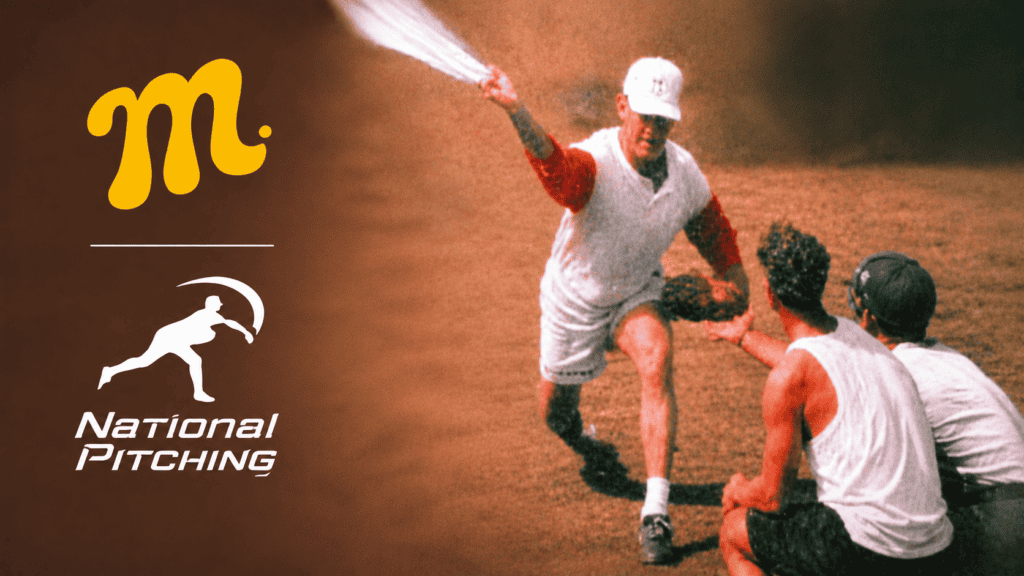
Ask pitchers and pitching coaches about the towel drill and you’ll get a variety of opinions. Roger Clemens recently said he “freaking hates it.” Nolan Ryan rather famously did 100 towel-to-target reps off the mound each day in between starts. Over the course of his 27-year-career, he logged some of the highest pitch counts baseball has ever seen. Here’s how coach Tom House and National Pitching Association master performance coaches Robert Ambrose and Dean Doxakis explain the why and how behind their version of the towel drill.
Why Do You Recommend the Towel Drill?
Ambrose: The towel drill is one of the primary drills we use to correct faults, mostly because it would just be impossible to throw enough to do that. It takes a ballpark number of about 1000 reps to break a bad habit. However, in my experience, you’re going to have to do 2,3,4, 5000 reps in order to actually change a movement pattern, and you just can’t do that throwing a baseball. So you have to find another functional way to perform the pitching delivery so you can work on biomechanics and targeting. The towel drill is the answer for that.
Doxakis: The towel drill is a sequencing drill. A lot of detractors see the towel drill and say we’re trying to teach people to reach out and extend into release point. But, that’s not what’s going on at all. It takes a lot of reps to improve your timing, and throwing 1000 baseballs may not be that great for your arm. But there are stories of guys doing 1000 towel drills in one day and feeling just fine. You’re not going to get hurt doing the towel drill, and it’s a great way to get the sequencing correct. And what happens with good sequencing is that it inevitably corrects your arm path and improves your release point. The goal of the towel drill is not to create a release point. It’s to get the kinematic sequence correct throughout the entire process so those other improvements can happen naturally.
How to Set Up for the Towel Drill
Measure Target Distance
- Start in set position, with the front foot crossed over the back foot and both feet flat on the ground.
- Preset your shoulders closed, bend the knees equally and position your forward hip slightly toward the target.
- Lift the knee toward the glove and in the direction your chest is pointed, moving forward simultaneously. Go fast!
- Keep your shoulders closed until footstrike and whip the towel in a full-speed throwing motion without releasing the towel.
- Head and glove position should be stabilized and in-line with the center of your body.
- Mark where your front foot lands and add five steps, heel to toe. Your partner should place their toe in front of your toe at the fifth step. Target height should be level with your eyes at foot strike.
Executing the Drill
- Set up in the same position as before; front foot over back, feet flat, front hip slightly forward.
- Go fast and whip the towel at full speed.
- The towel should strike the target at release point.
- If you’re short of the target with the towel, your glove is not stabilized over your front foot within the width of your body for long enough.
- If you’re missing the target left or right, your head is not directed toward the target for long enough.
- If you hit the glove, you would likely throw a strike, because all of your vectors are properly aligned.
At What Level of Intensity Should You Perform the Towel Drill?
Ambrose: if you’re working on a biomechanic, you want to do the drill at the level of intensity at which you can do it perfectly. So if you can’t do the drill perfectly at 100%, back it off to 80%. But if you can do the drill at 100%, that is the preference.
What About Grip?
The towel drill can be done with multiple pitch grips; fastball, curveball and changeup. Just remember to grab the towel with your middle finger and squeeze, because it stabilizes the UCL. We always want the athlete squeezing something while they’re doing reps. If you notice, all of our bands have a football grip. Other organizations will use a band strapped to the wrist, but that allows you to have an open hand and not flex the forearm. That puts the UCL at risk. We also know grip strength correlates with velocity and arm health. So, in our drill work, we always ask the athlete to grip and hold the implement in order to build strength that’s functional.
What are the Most Common Mistakes with the Towel Drill?
Ambrose: The most common mistakes I see are using a target that is too low, like a 10-gallon bucket or a cone or something else that is just two feet off the ground, or using a towel that is too big, like a beach towel or bath towel. We have a specific, 3-ounce towel for the drill. The length of the towel is part of the stride-plus-5 to get to the glove. If you use a longer or shorter towel, you have to change something about the station, and our station parameters are very specific.
Using the Towel Drill for Recovery
Ambrose: One of the great stories of Tom’s time working with Nolan Ryan was that between starts, Nolan would do 100 towel-to-targets off the mound every day. He wouldn’t throw a baseball off the mound, but he would do 100 towel-to-target drills each day. Then, he’d do flat ground throwing, and that way he was able to recover. The pitch counts Nolan put up are legendary, and of course the length of his career is probably not going to be matched. Recovery is a big part of what we do. That’s why towel drill is such a great drill to do for pitchers in-season, because you can get throwing reps that work on the delivery and targeting. But you can get bullpen work without throwing a bullpen with a towel drill.
A Japanese Study released in 2024 showed the towel can produce up to 80% of the stress of a regular throw. What are your thoughts on that?
Doxakis: I tested valgus torque at the elbow using the Motus Sleeve with an NPA towel in 2020 and it showed similar numbers to the Japanese study. However, those results simply do not align with what athletes feel or experience when doing towel drills. In our experience, athletes do not feel the same fatigue they feel when they are releasing a baseball. Their stiffness and soreness decreases after towel drills. And they do not significantly alter the natural and efficient movements of their delivery, specifically posture and arm slot. Additionally, there are many other elbow stresses besides valgus that the study did not measure. They also did not measure anything in the shoulder, bicep, tricep or forearm. Lastly, assuming their measurement of a 20% reduction in valgus torque is correct, I would view that as a good thing as compared to a regular throw.
Click HERE to view a webinar with Doxakis and Ambrose on the towel drill, with video demonstrations of many variations.
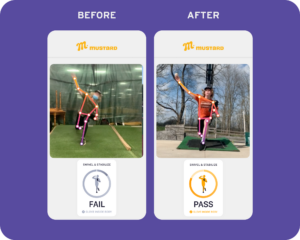
If you’d like more great content from Mustard, and you’d like to evaluate and improve your own pitching mechanics, download the Mustard pitching app today.